
Running a Major Marathon?Let’s break down the minors so race day feels smooth, not chaotic. :)
There’s something different about the majors. The energy is louder, the crowds are deeper, the logistics are… a lot. And while it’s easy to get swept up in the excitement of it all, the athletes who have the best experiences aren’t the ones chasing perfection, they’re the ones who stay grounded in what’s familiar.
Across the board, experienced runners say the same thing: don’t let the magnitude of the event pull you away from your process. The race may be in a different country, but your body still responds to the same inputs; fuel, pacing, rhythm, and rest.
Quick reality checks before we dive in:
* Crowded races → run for experience, not just pace
* Jet lag can mask hunger → don’t skip fueling
* Race day adrenaline is real → control the first miles
* Always pack your race kit in your carry-on
and also… Yes, London might hand you tea mid-marathon. No, this is not the time to experiment. xD
*Sightseeing is better after* the race
10–14 Days Out: Stay Steady
This is where many runners start to overthink. You’re close enough to feel the race, but far enough out that the urge to “do more” can creep in. Resist that. Fitness is already built!!! nothing you do here will dramatically improve performance, but it can absolutely disrupt it.
Instead, think of this phase as protecting what you’ve built. Keep your routine steady, your workouts familiar, and your fueling consistent. If you’re traveling across time zones, begin gently adjusting your sleep so the transition isn’t a shock to your system.
Keep it simple:
* No last-minute fitness pushes
* Practice fueling exactly as planned
* Shift sleep gradually if needed
* Prioritize consistency over perfection
Have a travel checklist and work on all the logistics vs waiting 24 hours before departure to ensure you have everything you need.
Travel + Arrival: Control What You Can
Travel is where the variables start stacking up; dehydration, stiffness, disrupted sleep, unfamiliar foods. The goal isn’t to eliminate these (you can’t), it’s to minimize their impact.
Hydration starts before you even board the plane. Movement during travel matters more than most runners realize, especially for keeping your legs from feeling flat when you land. Once you arrive, your job is to anchor yourself to the new environment as quickly as possible: daylight, local meals, light movement.
And expect things to feel a little ‘off at first. That’s not necessarily a red flag. It can be apart of the process as your body acclimates.
Travel smarter, not harder:
* Hydrate consistently (+ electrolytes)
* Move every 1–2 hours while traveling, even a quick stand up + rotational stretch can help
* Easy run within 24 hours (20–40 min + strides)
* Get on local time quickly (food + sunlight)
* Expect 1–2 “off” feeling runs (may feel a little heavy. don’t panic. remember: panic/anxiety can add to stiffness!)
Fueling + Environment: Respect the Differences
One of the most overlooked pieces of racing abroad is how different environments impact your body. Climate, humidity, even food composition can shift how you feel on race week.
The safest approach? Keep things as familiar as possible. Stick to simple meals you know your body tolerates, and avoid the temptation to try something new just because it’s available. Hydration is especially important here—many runners underestimate how much more they need in warmer or more humid conditions compared to training.
Stay predictable:
* Stick to familiar, simple foods
* Avoid major changes in fiber or timing
* Adjust hydration based on climate
* Don’t let jet lag disrupt your fueling schedule
Race Week: Less is More
By race week, the work is done. What matters now is how you show up to the start line; mentally and physically.
Runs should feel easy, controlled, and purposeful. This is not the time to “test” anything. Strides can help you stay sharp, but overall the focus is rhythm, not reassurance. Do not try to prove fitness. What you really need to do most at this point is protect your body and. mindset.
At the same time, this is where you can begin to take in the experience. Find a local coffee shop, walk a quiet park, maybe even join a shakeout run. Just keep it balanced; too much time on your feet can sneak up on you.
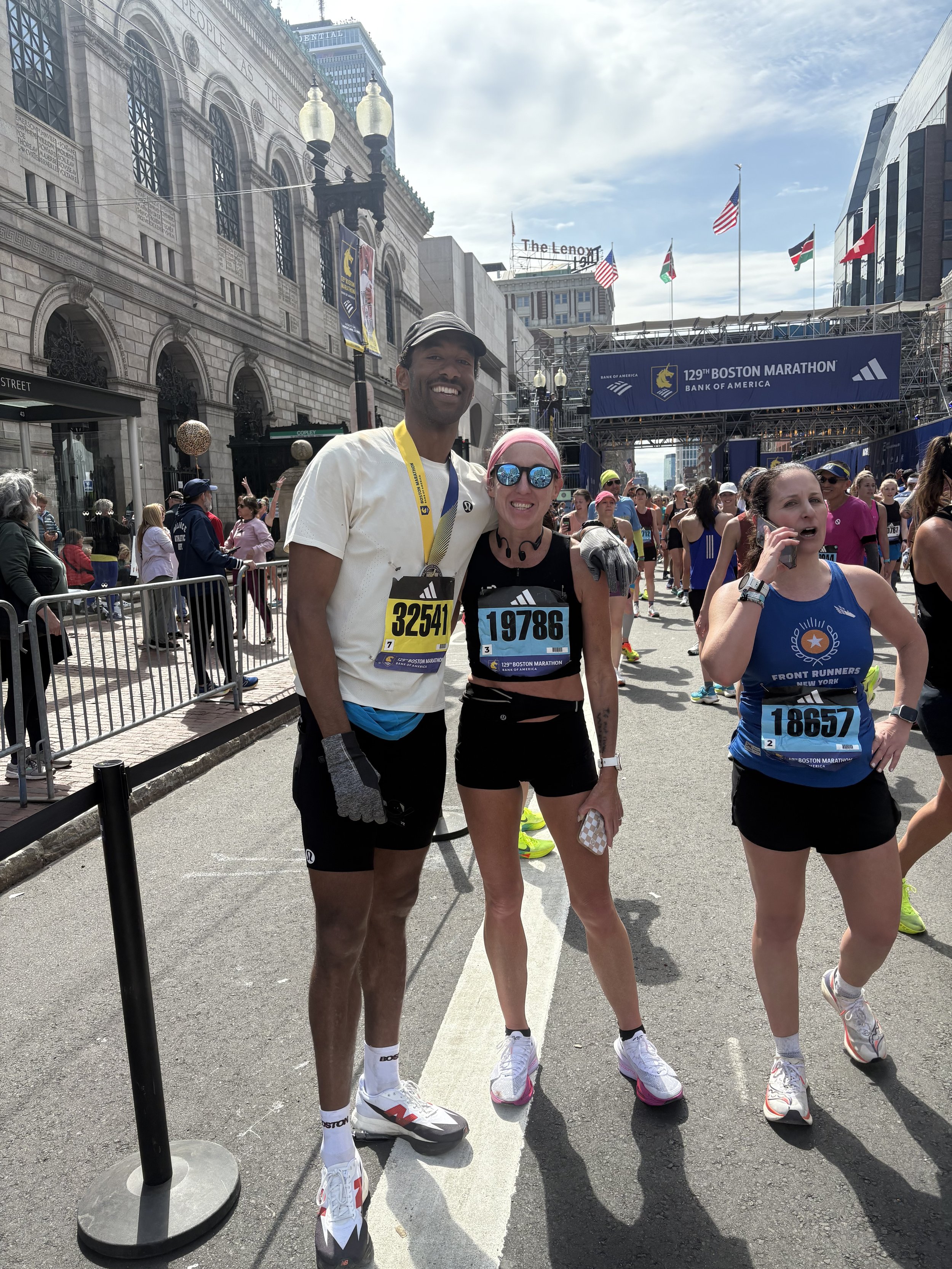
Boston Marathon
Stay grounded:
* Keep runs short and easy
* Add strides 2–3 times during the week
* No testing fitness
* Enjoy the environment; without overdoing it
Race Day + The Experience: Run Your Race
Race morning at a major feels different. There’s an electricity to it; crowds, music, movement everywhere. It’s easy to get pulled out of yourself if you’re not careful.
This is where discipline matters most. Start controlled, settle into your rhythm, and trust the plan you’ve practiced. If something feels off early, don’t panic; adjust effort, not emotion.
And if you’re not chasing a PR? Let yourself take it in. The landmarks, the crowds, the atmosphere—it’s part of what makes these races special.
Execution > emotion:
* Wake early enough to fully wake up
* Eat your normal pre-race meal
* Start controlled (always)
* Follow your pacing + fueling plan
Side note: One athlete sent me a video from London where they were literally serving hot tea on the course. Which feels very on brand…but also a good reminder: every race has its own personality. Stay present enough to take it in, but grounded enough to keep executing your plan.
* Adjust calmly if needed
Common Pitfalls (That Are Easy to Avoid)
Even experienced runners fall into the same traps when travel and excitement are layered on top of race day. Most of them come down to doing too much, too soon, or too differently.
Watch for these:
* Too much walking at the expo
* Underhydrating during travel
* Trying new foods or products
* Letting jet lag dictate effort
* Starting too fast
Final Thought: Run First, Explore After
One of the best pieces of advice from experienced marathon travelers is simple: save the sightseeing for after the race.
You’ll enjoy it more, your body will feel better, and you won’t spend race day carrying the fatigue of everything you tried to squeeze in beforehand. Many runners find that planning a couple days post-race to explore completely changes the experience for the better.
A Note From Rogue
While I haven’t personally raced internationally yet, this guide was built alongside the lived experiences of Rogue athletes who have run abroad and across multiple World Majors.
These insights come directly from the field; what worked, what didn’t, and what they wish they knew going in. And that’s what makes this special… it’s not theory, it’s real-world execution.
At Rogue, we’re not just coaching for races; we’re building toward bigger experiences. My personal coaching goal is to hit world-wide experiences!! Yes. DREAM CRAZY BIG folks.
And this is just the beginning. :) So first step:
We have a vision to take a Rogue team to the Boston Marathon in 2028.
Not just to run it;
but to qualify (time-based and/or charity runners), train, and show up together.
If that’s something sitting in the back of your mind…
this is your nudge.
Because qualifying doesn’t start the year you apply.
It starts now.
