
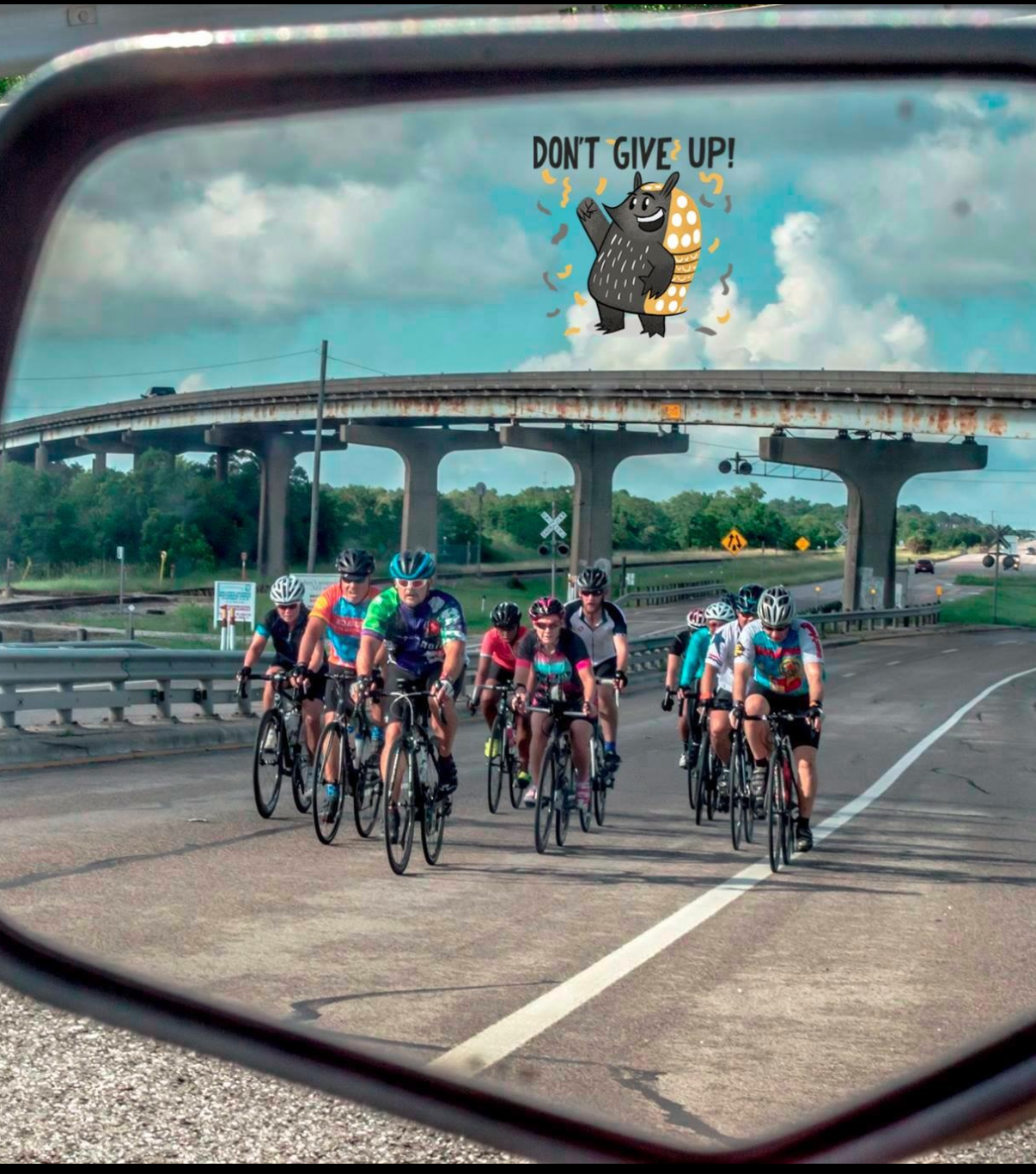
Push Through or Back Off? How Life Stress Affects Running Performance
Life stress changes how your body adapts to training. Learn how to recognize when to push through, when to modify, and when backing off actually builds more fitness.
Stop Asking, "Can I Do This Workout?"

The better question every endurance athlete should ask: what is the intention of this workout today and will is serve my overall well being?
Okay, that was two questions but still!
Every runner has faced the same or a very similar moment…
You're standing in your driveway. Your watch says threshold intervals. Your body says...
"I don't know about today…" and your mind starts the guilt, shame spiral.
Maybe work has been relentless?
Maybe your toddler hasn't slept?
Maybe you've been traveling?
Maybe you're emotionally exhausted?
Maybe you’ve just had a loss in the family?
or…. maybe all of the above!!!
So you ask the question almost every endurance athlete asks:
Should I push through... or back off?
It's one of the most important decisions you'll make during a training cycle.
Not because today's workout will make or break your season.
But because today's decision might if you push your body beyond what it’s capable of in that moment.
We literally obsess over the wrong thing.
Most runners are asking:
Can I complete this workout?
The better question is:
Can I recover properly from this workout?
however since recovery isn’t “sexy” and doesn’t feel like its “doing” anything our ego’s take over. Listen, the one workout isn't what makes you faster.
Its in the adaptation that happens afterward that does.
Without recovery...There is no adaptation. Only accumulated fatigue. I hope this helps put things in perspective for you!!
Your body keeps one recovery budget.
Coach Amy said something during our recent team call (ps-want access to that call, previous calls, and upcoming calls + training plan bonuses? Join the Squad E-mail List Here.) that sparked a great conversation:
"Stress is stress."
And that’s mostly true!! Our brain’s do NOT have separate bank accounts up there. No 401ks either. Unfortunate.
Your body doesn't maintain separate recovery accounts for training, work, relationships, parenting, poor sleep, travel, or emotional stress.
Okay for those of you who like the fancy, science chit-chat: Many of those stressors activate the same physiological systems involved in adaptation, including the autonomic nervous system and the hypothalamic-pituitary-adrenal (HPA) axis. They influence cortisol, inflammation, sleep quality, immune function, and ultimately your ability to recover.
The stressors aren't identical.
A hard workout doesn't create the same physiological response as losing your job.
But they all draw from the same recovery budget.
I like to picture it this way.
Imagine you wake up every morning with 100 recovery points.
A hard interval workout might cost 30.
A poor night of sleep might cost 20.
An argument with your spouse might cost 15.
A stressful work deadline might cost another 20.
Before you've even laced up your shoes...you've already spent most of today's recovery budget. :-/
The workout didn't change.
Your ability to adapt to it did. I can NOT STRESS this enough! (haha see what I did there? “STRESS” enough on a stress topic blog post?)
That's what so many athletes miss.
Adaptation only happens when recovery wins, too.
Exercise is intentionally stressful. That's the point. Stress isn’t all “bad”. Training creates disruption in the status quo. Recovery creates adaptation.
Research over the last several years continues to reinforce this idea. Reviews of endurance athletes show that recovery quality, sleep, nutrition, psychological stress, and training load all interact to determine whether an athlete adapts positively or accumulates fatigue. Recovery isn't separate from training. It is absolutely part of training.
This is why two athletes can complete the exact same workout and get completely different results.
One gets fitter. One gets more tired.
The difference often isn't the workout. It's everything surrounding it. Sleep, fueling, life stress. etc.
Join the Squad, get supported ASAP! Pick your package here.
This is where good coaching changes everything.
One of the biggest misconceptions in endurance sports is that great coaches simply know when to push athletes harder.
I actually think great coaches know when not to. Personally, convincing athletes to take rest days or lighten the training load has been the trickiest part of coaching for me.
Sometimes the bravest coaching decision is replacing a run with the bike. Sometimes it's removing intensity.
Sometimes it's telling an athlete…
"Today isn't the day to prove anything."
This doesn’t mean the we as coaches don’t think you can handle a training load or workout. Contrary! We just want to see you succeed for a very long time in this sport without crashing out.
Go ahead and download a free copy of your fast, 4-step cheatsheet to make fast decisions with workouts when you’re unsure. Familiarize yourself with the process so you’ll have it memorized and learn to trust your body and mind to make the smartest decisions for you.
Nicole's story
One of my favorite examples of this happened withCoach Nicole.
She spent much of the spring and summer of 2025 injured.
Instead of forcing fitness, we protected it. We leaned heavily into cross training. And I’ve got to tell you… she leaned in and went all in on the trusting me and this process. That takes a lot of faith!! Especially when you’re so used to training a certain way injured or not.
When running returned, it wasn't glamorous:
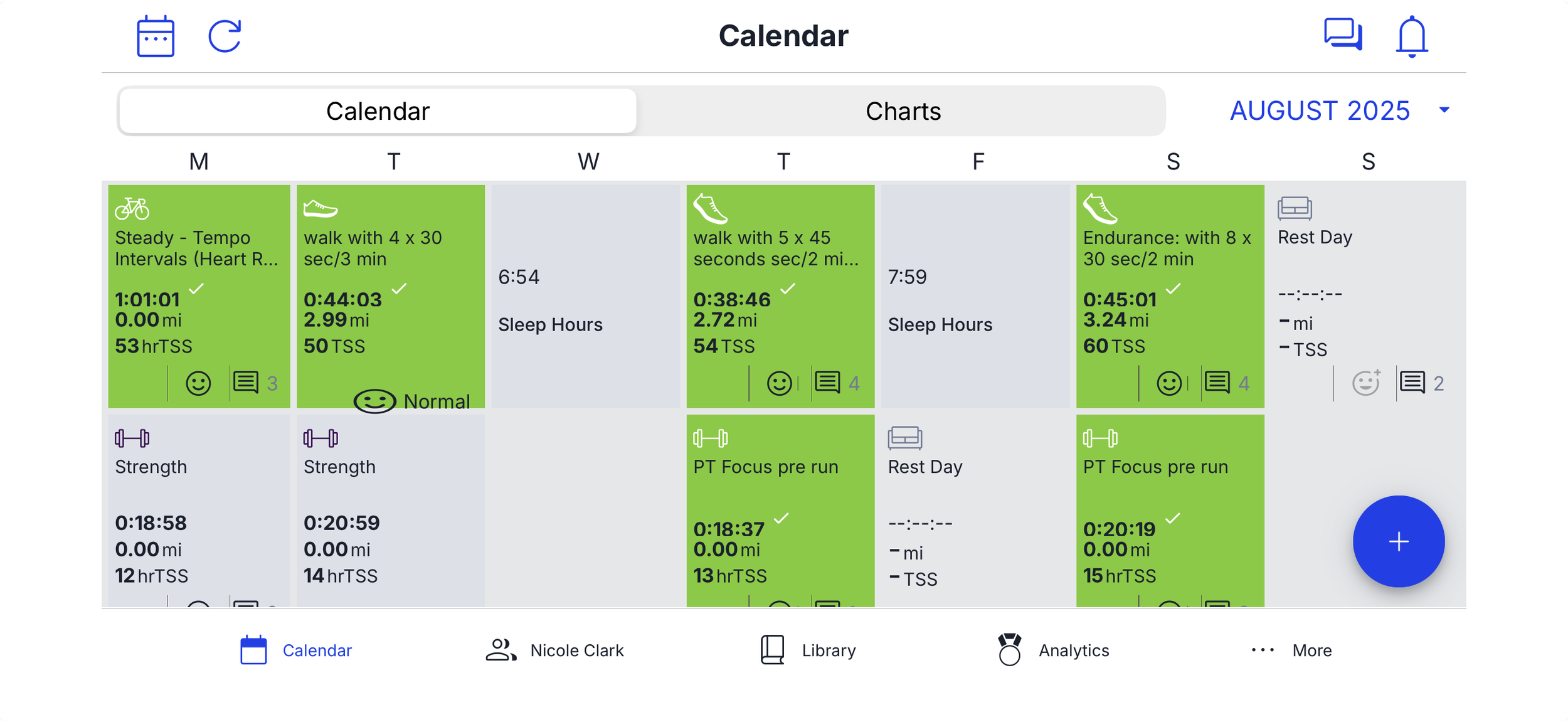
Easy walk with 4 × 30 seconds running. That’s its.
whoooooa the patience it required!!!
Over and over again we worked with run/walk intervals for several weeks.
During the entire build, Nicole completed only one or two true speed workouts before her 10k February 1st. 2025. So as you can see less than 6 months of easy runs after a few month of cross-training and she busted a long standing PR in her 40s AFTER injury.
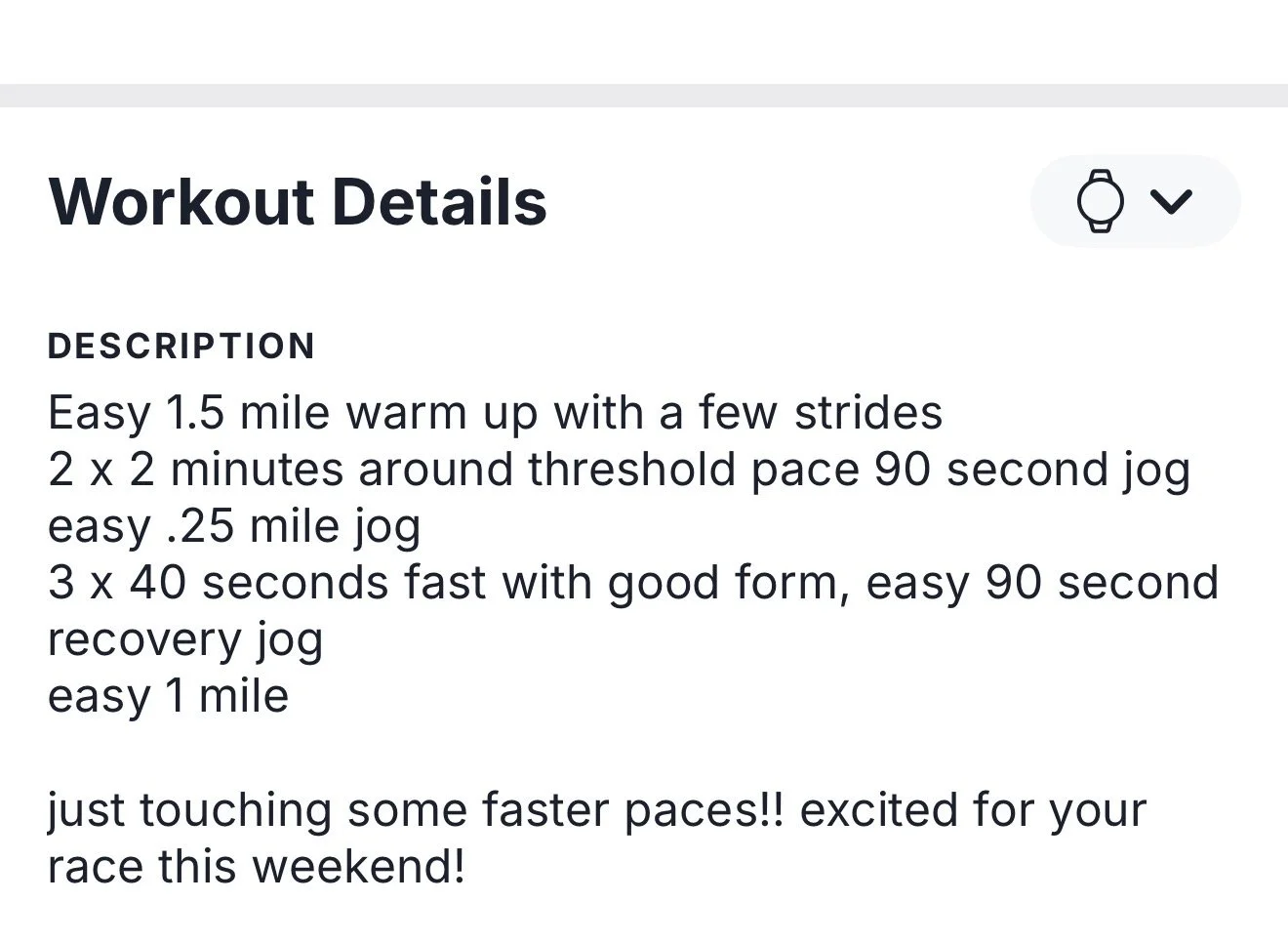
If you looked at her TrainingPeaks, you probably would have assumed she wasn't ready to “race”. Then she lined up for a 10K.
And ran nearly 90 seconds faster than she'd ever run before. Not because we found a magical workout. LOL no… 2 × 2 minutes wouldn’t be considered magical by our IG speedsters. What happened here was: we respected adaptation and managed the total stress load.
We protected consistency and let recovery do its job. I think most folks struggle with recovery because it’s a mostly “hands off” job for us. We don’t like to sit around because it makes us feel like we aren’t DOING anything.. I respect the hustle. But, respectfully you ARE doing something!
Fitness isn't built by stacking heroic workouts. It's built by stringing together months of recoverable training.
-
Nicole took much of her time while coming back from injury studying running gait analysis and now offers her service to our Squad!
-
Nicole also offers multi-sport coaching as a means to explore other avenues of fitness, prevent running burnout and injury.

The Push or Back Off Framework
This is exactly why we created our Push or Back Off Framework.
It's not designed to make you “soft”.
It's designed to make you more in-tune with your body’s cues.
Before every workout, ask yourself four questions:
1. Recognize the signal.
What is your body actually telling you?
2. Assess the context.
Is this training fatigue... or life fatigue?
3. Make the call.
Push. Modify. Or back off.
4. Learn.
Log what you decided and how it played out.
Over time, you're building something far more valuable than perfect workouts.
You're building judgment.
The athletes who improve the most aren't the most stubborn.
They're the most adaptable.
They understand that consistency beats intensity. That one modified workout rarely costs fitness. But one poorly timed heroic workout can cost weeks.
Real toughness isn't proving you can suffer, real toughness is making the decision that gives you the best chance to train again tomorrow.
let me repeat that for you:
Real toughness isn't proving you can suffer, real toughness is making the decision that gives you the best chance to train again tomorrow.
So the next time life gets messy and your watch buzzes for a workout...
Don't ask,
Can I do this?
Ask,
Will I be able to recover from this?
That single question might change your entire season.
Run hungry, run humble.
References
Li, Y., et al. (2024). Effectiveness of Recovery Strategies After Training and Competition in Endurance Athletes: An Umbrella Review. Sports Medicine - Open.
Nuetzel, J., et al. (2023). Coping Strategies for Handling Stress and Providing Mental Health in Elite Athletes.Frontiers in Sports and Active Living.
Meeusen, R., et al. (2013). Prevention, Diagnosis and Treatment of the Overtraining Syndrome. European Journal of Sport Science.